Showing posts with label Chemistry Education. Show all posts

7/1/18

PhD scholarship in Theoretical Chemistry/Physics in New Zealand

The Institute for Advanced Study at Massey University in Auckland, New Zealand, is looking for an excellent student with a Master of Science in Computational/Theoretical Physics or Chemistry to work on a Marsden funded research project (17-MAU-021) on superheavy element chemistry and physics.  The person is required to have excellent knowledge in either theoretical chemistry or physics. The project is in collaboration with Prof. Witek Nazarewicz from the Department of Physics and Astronomy at Michigan State University, USA. The scholarship remains open until filled and comes with a scholarship to support for living expenses ($27,500 per annum) and tuition fees. Candidates are given the opportunity to obtain a PhD degree from Massey University. The duration of this scholarship is three years with the possibility of an extension.To be eligible for this scholarship you must fulfill the entry requirements for a PhD at Massey University.
Expressions of interest should contain the following information:
  • A one-page summary justifying the applicant’s suitability for the role
  • An academic CV
  • Two letters of reference
  • Transcript of qualifying degree
You can send expressions of interest and enquiries to Distinguished Professor Peter Schwerdtfeger at p.a.schwerdtfeger@massey.ac.nz


For more information about our research center or Massey University see the websites at http://ctcp.massey.ac.nz/and http://www.massey.ac.nz/massey/home.cfm. 

For more information about nuclear physics group of Prof. Nazarewicz, see https://people.nscl.msu.edu/~witek/www/Nazarewicz.htm.

9/1/14

Regional Chemistry Seminar Organized at Biratnagar


Chemists from eastern, Nepal organized a two day seminar in Biratnagar this weekend. The seminar was organized with the collaboration of Nepal Chemical Society (NCS) and Department of Chemistry, Mahendra Morang Adarsh Multiple Campus.

Thirty speakers presented their research findings in the seminar including invited lectures. Among the poster presenters (13 altogether), Shova Neupane secured first position whereas Nabin Basnet got second position. Two students, Arun Karna and Bihari Yadav were awarded with third position prize. Organizers said such competition among students encourages and motivates them for research work.

12/18/13

Chemistry Professors at Tribhuvan University Decline Plagiarism Charges from University Grant Commission, Nepal

Press release by Prof Dr. Kedar Ghimire, head of Central Department of Chemistry, TU

And, below is the press release by University Grant Commission


8/9/13

analytical/bioanalytical chemistry faculty position at The University at Buffalo (UB), The State University of New York (SUNY)

The Department of Chemistry at the University at Buffalo (UB), The State University of New York (SUNY) invites applications for a full time tenure-track faculty position in the field of Analytical/Bioanalytical Chemistry at the Assistant Professor level to begin in Fall 2014. 

All areas of analytical/bioanalytical chemistry will be considered; however, areas of preference would include those with research interest that complement the current research efforts in the department (www.chemistry.buffalo.edu). The successful candidate will contribute to the department and university’s mission through research, teaching, and service. The Assistant Professor is expected to develop a vigorous and externally funded research program, teach at the undergraduate and graduate levels, and will provide service to the department, university, and his/her discipline. The candidate must have a Ph.D. in chemistry or closely related discipline; postdoctoral research experience is preferable.

Applicants must apply online at:
https://www.ubjobs.buffalo.edu/applicants/Central?quickFind=56406

The application package should include: a letter of application, curriculum vitae, research proposal (5-page limit), statement on teaching, and the names and contact information of three references. References will be contacted with a request to submit letters online. Review of applications will begin on October 1, 2013 and will continue until the position is filled.

Questions may be addressed to: achemsch@buffalo.edu.

The University at Buffalo, The State University of New York is an Affirmative Action/Equal Opportunity Employer/Recruiter (AA/EOE) and strongly encourages applications from women, minorities, and individuals with disabilities.

4/9/13

Prof Isaiah M. Warner awarded with ACS Award in Analytical Chemistry

Prof Warner (source)
American Chemical Society (ACS) spring national meeting at  New Orleans has announced different prestigious awards Chemists from different background.

Among them, ACS Award in Analytical Chemistry is given to Prof Warner from Louisiana State University, for his significant contributions in three distinct areas of analytical chemistry: molecular spectroscopy, separation science, and development and applications of novel nanomaterials.

According to his research group website, his group research involves fundamental studies in analytical chemistry including development of new methods for analytical meausrements. Most of his research are in the general area of bioanalytical chemistry and few on environmental analysis. He is currently Vice Chancellor of Office of Strategic Initiatives and Boyd Professor and Philip W. West Professor of Analytical and Environmental Chemistry at Louisiana State University, Baton Rouge, Louisiana. He has published more than 300 peer reviewed scientific papers and is a reciepient of several prestigious awards recognizing his contribution in analytical chemistry.

A complete list of ACS national awards 2013 can be found here.
 

11/20/12

£250 prize for schools electrochemistry challenge

The RSC's Electrochemistry Group is inviting students to enter a competition to design a battery and win up to £250.
The competition asks students 'Imagine you had a power cut at home - what could you use to produce some power?' The group are looking for the most imaginative solution that uses materials found in the home and garden.
Lemon connected to a multimeter
A separate set of prizes is available to the best entry of a cartoon or illustration that demonstrates an electrochemical principle. Again, the judges are looking for creativity and entrants are asked to 'think different!'
More information can be found on the RSC Electrochemistry Group website. The deadline for entries is 15 December 2012.

more here: http://www.rsc.org/Membership/Networking/InterestGroups/Electrochemistry/electrochemistry-challenges.asp

7/17/12

International Chemistry Olympiad Questions: Can you answer them?

44th International Chemistry Olympiad (IChO) is going to be held on July 21–30, 2012 at the University of Maryland, USA. Secondary school students from all around the world are competing for medals by taking both theoretical and laboratory examinations in chemistry. As this years exam is coming very close, here we put some of the questions asked in previous exams. 

“Graduate students might be able to answer most of the questions, but not all of them, and certainly not within the period of time that’s expected,” writes Chemistry and Engineering News quoting Michael P. Doyle, chair of the chemistry and biochemistry department at the University of Maryland.

Check yourself, if you can correctly answer these questions.


If you can not see complete question, click on each question.

Couldn't find right answers? Find the answers to these quiz questions at http://cenm.ag/popquiz. 

6/29/12

NMR and HPLC in organic synthesis laboratories

In continuation of our effort to let you know some of the routine equipments/instruments used for research, this time Rameshwor Pandit  from Yeungnam University, South Korea presents two key instruments used in his Organic Synthesis Lab: NMR system and HPLC. These instruments are widely used in research and routine analysis laboratories for variety of applications.

(1)   NMR Spectroscopy

This system consists of mainly four parts (1) superconducting magnet (2) detector and amplifier (3) console and (4)  spectrum display.
Varian VNS 300 MHz                                                   

At the beginning, sample solution is prepared in deuterated solvent. Next, the computer program is opened (above is Varian VNS 300 MHz) and set some of the parameters like temperature, spinning.  As soon as sample is inserted into the magnet, the system is locked to a particular deuterated solvent. The Varian system works on automated shimming while Bruker type of system works on mechanical shimming. Now the sample is scanned setting some acquisition parameters like no. of scans, time, sample FID. As the sample is scanned, computer shows spectrum which is processed to get NMR spectrum as shown in computer display (below).

6/5/11

Two New Elements Confirmed by IUPAC: Elements 114 and 116


A chemical element is a pure chemical substance consisting of one type of atom distinguished by its atomic number, which is the number of protonsin its nucleus. There are 94 elements believed to occur naturally on Earth and rest of the elements are synthesized in laboratories.

6/1/11

Are Carbon Nanotubes the Future of VLSI Interconnections?

Original paper is published by-
K. Banerjee and N. Srivastava, University of California


Summarised by Anant B. Marahatta

What is VLSI?
• Very-large-scale integration (VLSI) is the process of creating integrated circuits by combining thousands of transistor-based circuits into a single chip.
• VLSI began in the 1970s when complex semiconductor and communication technologies were being developed. The microprocessor is a VLSI device.


New wiring solutions…!
• Metallic carbon nanotubes (CNTs) are promising candidates that can potentially address the challenges faced by copper and thereby extend the lifetime of electrical interconnects.
• carbon nanotubes (CNTs) have aroused a tremendous amount of interest in their use as building blocks of future integrated circuits due to their outstanding electrical properties

CNT based interconnects can potentially offer significant advantages over copper.
• CNTs exhibit extraordinary strength and unique electrical properties are efficient conductors of heat and are metallic in nature.
•SWCNTs are a very important variety of CNT because they exhibit important electric properties that are not shared by MWCNTs. The remarkable properties of SWCNTs stem from the symmetry and unusual electronic structure of grapheme [one atom thick sheet of graphite].

∙An isolated CNT can carry current densities in excess of 1010 A/cm2 without any signs of damage even at an elevated temperature of 250 0C. However, the high resistance associated with an isolated CNT (greater than 6.45 KΩ) necessitates the use of a bundle (rope) of CNTs conducting current in parallel to form an interconnection. CNT bundle interconnects have superior performance compared to Cu.

5/26/11

Setting up Computational Chemistry (Quantum Chemistry) laboratory? Technical stuffs [Part II].

Anant Babu Marahatta
Ph.D. student in chemistry
Tohoku University, Japan


(Interested fellows are suggested to read the first part [Part 1] of this article archived herewith before proceeding it).

The designation of the molecular model is another mandatory step before performing any sorts of computer calculations. Several model making software (molecule model builder) are available free of charge. Mercury, RasMol, CHIME, SwissPDB Viewer, Avogadro etc. are some of them. How to handle them is the matter of their practice. It is very essential to know that some of the molecular builders do not support the calculating software. Let’s say in this step that we could model the sample system of our interest and get the Cartesian co-ordinates or Z-matrix of it (generated by the molecular builder) which will be our input for exploring the chemistry behind it.


Let’s move to the calculating software, one of the very well-known is GAUSSIAN (currently Gaussian-09 version for the windows G09W is available) owned by the Gaussian Inc., USA. It is very flexible software developed by the quantum chemists of all around the world. It is very trustworthy for the most accurate calculations especially ab initio, MD simulation and some semi-empirical calculations. Thus, for having the copy of this software, the university must be the member of it and get the license. The normal cost for the single computer license (single CPU version) is $1150 and for the multiprocessor /core version is $1725 (excluding shipping charge). The detail information is available here.

5/20/11

How to write a paper to communicate your research? 101 on publishing your work.

Publishing your research work is very important in your career. Some people argue that if you don't publish your work or your work is not publishable then you have not done anything. It is said that if your research doesn't generate papers, it might just as well not have been done. "Interested and unpublished" is equivalent to "non-existent".

Writing your research findings and publishing them on good journals requires extra effort and skill than just research. Publishing work should be a part of research itself. The effective communication of scientific research is vital both to the scientific community and to a scientist’s career.


Recently, American Chemical Society (ACS) has produced series of video interviews with top figures of the related field to assist authors and reviewers in understanding and improving their experience with the processes of writing, submitting, editing, and reviewing manuscripts.

This time, I want to share an interview with Prof George Whitesides from Harvard University. He is the chemistry professor and has published more than one thousand research articles.

If you are looking for answers of following questions then listen and watch his interview.
  • When should you begin to think about writing up your research for publication?
  • How do your students handle your approach of writing while you research?
  • How do new technologies help scientists communicate their work?
  • How many drafts does each paper undergo? Do you have your papers undergo an internal review?
  • Do authors need to be thinking of marketing their articles?
  • How concerned should I be about the title and abstract of my papers?
You can listen his interview by clicking the link below.


5/18/11

Setting up Computational Chemistry (Quantum Chemistry) laboratory? Technical stuffs-Part I

Anant Babu Marahatta
Ph.D. student in chemistry
Tohoku University, Japan


(Being a 4th year Doctoral student majoring Quantum chemistry, “Nepa Chem’s-facebook-status” on 11th April 2011 motivated me to write this article. It is solely dedicated to our energetic seniors/colleagues who are planning to introduce the Computational Chemistry lab in Nepal.)

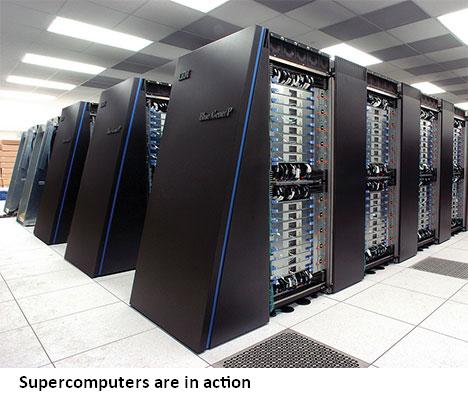
This informative article is intended to provide some pre-requisites needed to set up very basic computational chemistry (Quantum Chemistry) laboratory. It is not valid to those who want to establish the high-tech lab by installing the supercomputing calculators into the networks which is a very common way in the renowned research institutions. Even though “LINUX” computer operating system with “Emacs”, world's most powerful text editor, is very common to be installed into the computer, the basic computational laboratory can be set up in the absence of them.

Thus, the person who is master on handling the networking systems of the supercomputers (calculators) with the personal computer (local machine) having installed LINUX is assigned as an administrator of the computational chemistry laboratory. Therefore, nominating a technical staff with such assignments is the crucial point to set up the advanced computational laboratory.

Let me start by defining computational chemistry, a branch of chemistry that uses principles of computer science to assist in solving chemical problems. Thus the computers with good memory are the very fundamental tools of it.

5/6/11

Diamondoids: Potential candidate for the Nanotech.

Anant Babu Marahatta
Tohoku University
Sendai, Japan

One of the current aspects of chemistry is being a watch-dog of the nanoworld which is a major discipline in Nanotechnology. In the context of building materials for nanotechnology components and in “bottom-up” approaches of chemistry, diamondoids have been of great interest in recent years.


Most generally, diamondoids refer to structures that resemble diamond consisting of a number of six-member carbon rings fused together. They are strong, stiff structures containing dense, 3-D networks of covalent bonds, formed chiefly from first and second row atoms with a valence of three or more. Various hetero-atoms which might include N, O, Si, S, and so forth, some time, act as the major substituent. 

4/22/11

A Chemical to capture radioactive substances: "Fukushima-reactors issue"

Anant Babu Marahatta
Tohoku university
Japan

Nuclear energy can be both beneficial and harmful, depending on the way in which it is used. We routinely use X-rays to examine bones for fractures, treat cancer with radiation, and diagnose diseases with the help of radioactive isotopes. Approximately 17% of the electrical energy generated in the world comes from nuclear power plants. 'Nuclear reactors produce electricity so cheaply that it is not necessary to meter it. The users pay a fee and use as much electricity as they want. Atoms provide a safe, clean and dependable source of electricity. '
On the other hand, nuclear hazard which literally means “risk or danger to the human health or to the environment caused by radiation emitted by the radioactive nuclei of a given substance, or the possibility of an uncontrolled explosion originating from a nuclear fusion or fission reaction of atomic nuclei”, that appeared in the Japanese “Fukushima nuclear plants” is the latest example of its negative impact. .

The contamination of the coolant (by radioactive iodine, cesium, and strontium), a mandatory process during nuclear chain reactions, caused by the “Fukushima nuclear reactors leakage” is the current issue of the world. To remove such radioactive substances, recently, a Japanese chemist and a domestic company have jointly developed a powdery chemical that can capture and precipitate radioactive substances in water.

This powder, made of various chemicals and minerals, including zeolite, can remove radioactive substances such as iodine, cesium and strontium, a professor at Kanazawa University said. The powder was able to remove almost 100 percent of cesium when 1.5 grams of the powder were mingled with 100 milliliters of water in which cesium had been dissolved at a density of 1-10 ppm. It has been confirmed to have the ability to remove iodine even at a density of 100 ppm. It is reminded that the densities of radioactive substances seeping into the water at the Fukushima No. 1 nuclear complex are estimated at around 10 ppm. This powder could be used in the ongoing effort to deal with contaminated water at the crippled Fukushima nuclear plant

4/4/11

Potentiometry in Analytical Chemistry


This article was published in SPECTRUM, a science magazine published by ChemSA-Central Department of Chemistry, TU in 2005. I do not know whether this magazine is still being published or not. Since this magazine was published in printed copy only and I had its electronic copy, I want to share it with wide range of readers through NepaChem.-Basant Giri
---------------------------------------------------------------
Potentiometry is one of the methods used for quantitative analysis in analytical chemistry. Here potential of an electrode in equilibrium with an ion to be determined is measured. There are two ways to quantify the given substance using potentiometry. One is direct Potentiometry and other is potentiometric titration. In direct potentiometry a single measurement of electrode potential is used to determine the concentration of an ionic species in solution.
Potentiometric Titration
In potentiometric titration, the end point is determined by measuring the potential of an indicator electrode as a function of the volume of titrant added. Beherend, in 1893 performed potentiometric titration of chloride, bromide and iodide with mercurous nitrate.

In a simple arrangement for a manual potentiometric titration a reference electrode (e.g. saturated calomel electrode or silver-silver chloride) is coupled with an indicator electrode, which is reversible with one of the ions involved in the titration. The emf of the cell containing the initial solution is determined and emf of the cell after each addition of titrant solution is also measured. Sufficient time should be allowed after each addition for the indicator electrode to reach a reasonably constant potential (~ 1-2 mV) before the next increment is introduced. In this procedure, we are concerned with changes in emf of the cell which is due to the change in concentration of ions reversible to the indicator electrode. Advantages of potentiometric titrations over 'classical' visual indicator methods are:
  1. Can be used for coloured, turbid or fluorescent analyte solution.
  2.  Can be used if there is no suitable indicator or the colour change is difficult to ascertain.
  3. Can be used in the titration of polyprotic acids, mixtures of acids, mixtures of bases or mixtures of halides.

3/27/11

What is Nuclear Disaster? # Nuclear Reactor Leaking in Japan# Video

Last few weeks Japan is facing natural and man made disaster. After the massive earthquake, Sendai and neighboring regions were heavily affected by Tsunami which causes huge loss of human life and other physical structures. Tsunami also damaged nuclear power plant. There are lots of rumors about harmful radiation leaking from the damaged power plant. Video below explains in simple way about nuclear power plant and its safely issues.

3/24/11

DEATH BY OXALIC ACID

Anant Babu Marahatta
Tohoku University, Japan


Oxalic acid is a constituent of many house hold products. It is found in many disinfectants, household bleach, metal cleaning liquids, antirust products and furniture polishes. Oxalic acid is a crystalline, colorless substance and is efflorescent. This means it tends to become powdery on account of loss of water of crystallization. It has got its name from the Greek word Oxalis, which means sorrel. It occurs in sorrel plant and because of this the French chemist Lavoiser in 1787 named it as Oxalic acid. It occurs in the leaves and young stalk of Rhubarb, Spinach and even Cabbage. Sorrel is succulent acid herb used in salads.


Accidental poisoning has been known to occur after a hearty meal of rhubarb or sorrel. Food rich in oxalate can also lead to kidney stones because kidney stones are generally made up of oxalates. Crystals of oxalic acid are similar in appearance to those of magnesium sulphate (Epsom salt) and zinc sulphate. Because of this similarity, cases of accidental poisoning have occurred. Magnesium sulphate in doses of 15g is used as a laxative (to facilitate the evacuation of Bowels) and is non toxic. Since oxalic acid, a dangerous poison is so similar looking to Epsom salt-a commonly used drug as laxative medicine-it is necessary to be able to differentiate between the two. If the doctor or nurse fails to differentiate between the two, accidental poisonings may occur. Two patients at the mental hospital in Scotland had died in 1956 after receiving doses of oxalic acid which was mistaken for Epsom salts. Similarly zinc sulphate is also commonly used drug and looks very similar to the dangerous poison, oxalic acid. Thus in order to remain in the safe side, it is very much essential to be able to differentiate between them.

HOW DO DOCTORS DIFFERENTIATE BETWEEN THE TWO?

3/22/11

Chemistry Beyond the Textbook: 16 Nobel Laureates Speak

Learn about chemistry's many facets as explained by Nobel Laureates and discover why would one claim that chemistry is the 'queen of all sciences'. This video is one in a series of four, short educational videos capturing 16 Nobel Laureates' opinions on why chemistry matters.